
Snohomish Co. against Homelessness
- LXMVN Ink

- 6 days ago
- 5 min read

Snohomish County is Proactively Structuring the Path Out of Homelessness
A thriving commercial grid requires more than just high-tech security fences and stable power lines. True structural stability means a community must possess the capacity to absorb social friction and convert vulnerability into productivity. If a city simply ignores the human crises on its sidewalks, the resulting civic decay will eventually erode consumer confidence, drive up commercial insurance liabilities, and disrupt local business infrastructure.
While major metropolitan areas across the United States continue to struggle with entrenched vagrancy, open-air crises, and bureaucratic gridlock, Snohomish County has quietly deployed a completely different model. The county has rejected the passive, hands-off charity frameworks that have destabilized our southern neighbors. Instead, regional leaders, non-profit operators, and active faith networks have established a highly coordinated, accountability-driven alliance.
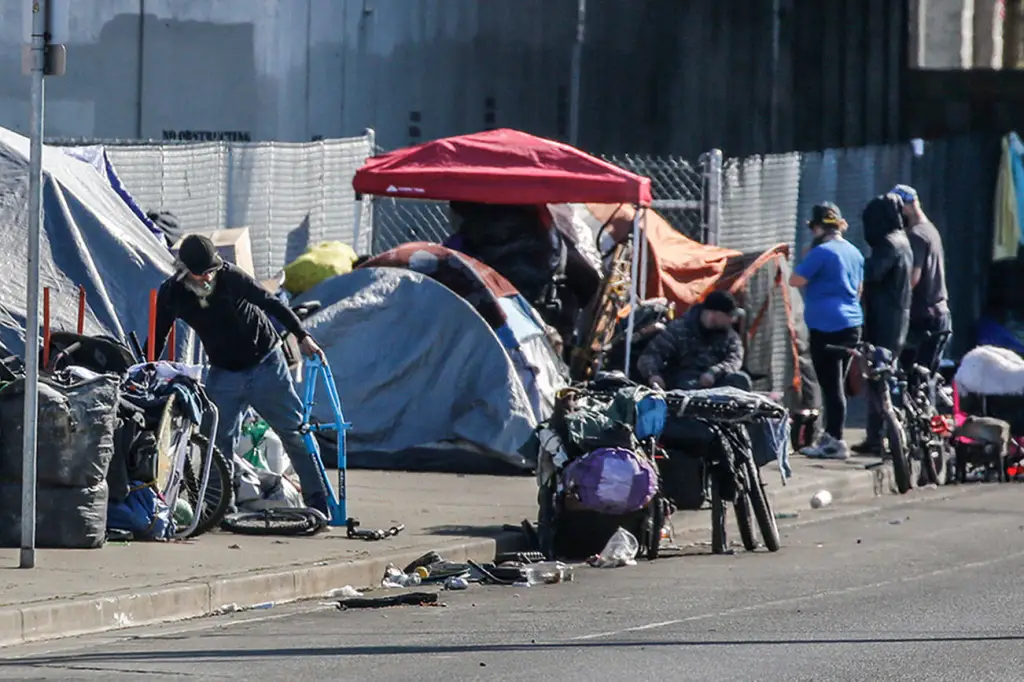
The data from the front lines reveals an encouraging macro-trend: Snohomish County is successfully compressing the footprint of visible, unsheltered homelessness. By aggressively expanding structured shelter capacity, launching innovative "New Start" stabilization facilities, and utilizing proactive law enforcement co-responder models, the region is proving that compassion and community order are not mutually exclusive. We are systematically building a framework that protects the vulnerable while ensuring our local business environment remains entirely safe, predictable, and poised for long-term growth.




Decoding the Ground Truth: The Power of Targeted Capacity
To see the layout of this success, we look directly at the hard metrics. Snohomish County recently finalized and released the complete results of its comprehensive annual assessment. This data acts as a vital tool for prioritizing federal, state, and local resources, giving us an unfiltered look at how local interventions are reshaping our streets.
The most profound takeaway from the assessment is a stark divergence from recent national trends:
[2025 Unsheltered Individuals: 536] -> [2026 Unsheltered Individuals: 505]
Result: A 5.8% Reduction in Open-Air Homelessness
This multi-year structural shift becomes even clearer when you look at the broader timeline. In 2023, completely unsheltered individuals made up a massive 53.8% of the county's total homeless population. By taking an aggressive, infrastructure-first approach, local programs have driven that proportion down to 43.4%.
This visible reduction in street-level homelessness is directly tied to a deliberate expansion of temporary and permanent shelter beds across the county grid. While the total number of individuals experiencing some form of homelessness ticked up slightly to 1,163 (representing 931 distinct households), this metric is fundamentally an indicator of expanded tracking and intake efficiency.
The number of individuals successfully brought into emergency shelters and transitional housing rose from 604 to 658. This capacity surge was heavily catalyzed by major infrastructural milestones, including the highly successful opening of The Tulalip Tribes pallet shelter village, which has provided an orderly, high-accountability environment for individuals to stabilize away from the chaos of unauthorized encampments.

The New Start Blueprint: Wraparound Accountability
Bringing individuals off the street is merely the first phase of the blueprint. True restoration requires a high-standards operational structure that addresses the underlying root causes of displacement. The data from the count underscores the absolute necessity of this approach: among the adults surveyed, 48.3% reported battling serious mental health challenges, 41.6% reported a substance use disorder, and 29.4% are actively wrestling with both simultaneously.

To tackle this intersection of mental health and addiction head-on, the Snohomish County Council unanimously authorized a powerful new operational framework: the New Start Centers initiative. This strategy involves converting underutilized commercial spaces, such as the former Days Inn facility located directly adjacent to the Everett Mall, into time-limited, high-accountability bridge housing.
These centers are explicitly designed not to function as permanent, low-barrier warehouses. Instead, they operate as disciplined stabilization pipelines. Backed by critical funding allocations, the county executed a strategic services agreement with The Salvation Army to act as the primary non-profit operator for the Everett New Start Center.
The operational layout of these facilities is meticulously structured:
Dedicated Case Management: Funding supports specialized, full-time personnel, including dedicated client services managers and hands-on case managers who monitor individual progress daily.
Integrated Wraparound Care: Residents are directly linked to on-site mental health counseling, structured substance use treatment options, and basic medical care.
The Path to Productivity: Through a professional partnership with the YWCA, the program deploys dedicated landlord engagement specialists. Their sole objective is to build clean, reliable pipelines that transition stabilized individuals out of bridge housing and directly into long-term, independent residential settings.
By keeping these programs time-limited and entirely tied to active behavioral progress, the county ensures that public resources are used to foster self-sufficiency rather than enabling destructive cycles.
Proactive Field Execution: The Co-Responder Net
The secondary defensive line protecting our commercial corridors is the seamless integration between human service departments and local law enforcement. Agencies like the Everett, Marysville, and Arlington police departments have pioneered co-responder models that change the entire dynamic of street-level intervention.
When an individual experiencing a crisis or creating a public nuisance in a commercial zone is encountered, the response is no longer a simple choice between standard arrest or complete inaction. Instead, patrol officers deploy directly alongside embedded social workers and outreach specialists.

Supported by an army of 275 dedicated community volunteers and partner agency staff, these field teams map out the county's four quadrants systematically. They utilize advanced data from the Coordinated Entry System to locate vulnerable households, break down unauthorized encampments safely, and present individuals with an immediate, clear choice: accept structured shelter, treatment, and help, or move away from commercial spaces.
This visible, proactive posture has radically compressed the space where chronic vagrancy can impact local commerce. For independent trades, automotive body shops, specialty contractors, and retailers featured on our PNW Thrive platform, this means the surrounding environment remains orderly and safe. Customers can visit storefronts without encountering civic friction, and business owners can focus their hard-earned capital on hiring and expansion rather than repairing property damage.

Maintaining the Standard: A Community Built to Last
What we are witnessing across Snohomish County is a masterclass in civic alignment. By coupling a firm, unyielding commitment to public order with a highly organized, resource-rich network of transitional programs, our communities are achieving what many thought was impossible: a measurable turnaround in the regional homeless crisis.
We have to recognize the immense value of the builders, the volunteers, the tribal partnerships, and the non-profit operators who are running these pipelines with precision and honor. They are proving that a community can be deeply compassionate while maintaining absolute zero tolerance for lawlessness or civic decay.
The numbers don't lie. Unsheltered homelessness is on a downward trajectory. Our shelter capacity is expanding under strict, professional management. The root causes of substance abuse and mental illness are being met with aggressive, wraparound accountability at the New Start Centers.
At lxmnv.com, we will continue to document, support, and connect the high-performing entities driving this regional renewal. The structural blueprint is holding perfectly, our streets are becoming cleaner and more secure by the day, and the forward momentum of Snohomish County remains entirely unmatched.
The foundation is solid. Let's keep building.
Sovereign Structural Sources
Snohomish County Department of Human Services: Official 2026 Point-in-Time (PIT) Homeless Count Summary. Complete data sets outlining the 5.8% reduction in unsheltered populations, demographic shifts, and the 43.4% multi-year proportion drop are maintained via Snohomish County Human Services.
Snohomish County Council Legislative Archive: Resolutions and Service Agreements for New Start Center Implementations. Documentation regarding Motion 26-005, Salvation Army operational frameworks, and YWCA landlord engagement programs can be reviewed via the Snohomish County Council Portal.
The Lynnwood Times & HeraldNet Archives: Regional Public Safety and Homelessness Progress Features (May 2026). Local journalistic records and command staff interviews verifying the impact of the Tulalip Tribes pallet shelter village and Everett Mall corridor bridge-housing programs.


Comments