
The Snohomish Boom
- LXMVN Ink

- May 22
- 4 min read

Architecting the North:
Why the Snohomish Ripple is Just the Foundation
Every major economic shift leaves a physical and structural footprint. For the past decade, the Pacific Northwest's blueprint was heavily anchored down south. But if you look closely at the infrastructure moving across the Puget Sound today, you can see a new master plan taking shape. The center of gravity has broken clean off the King County grid and reestablished itself in Snohomish County.
This isn’t an accidental migration; it’s an architectural realignment. Entrepreneurs, forward-thinking families, and industrial operators are actively leaving behind high-friction, high-cost environments for a space that balances aggressive development with a grounded, intentional community design.
At lxmnv.com and through our PNW Thrive initiatives, we don't just report on these shifts. We track the ripple effects—how massive corporate and industrial anchors create the operational demand that feeds local B2B networks, precision trades, and independent service providers.

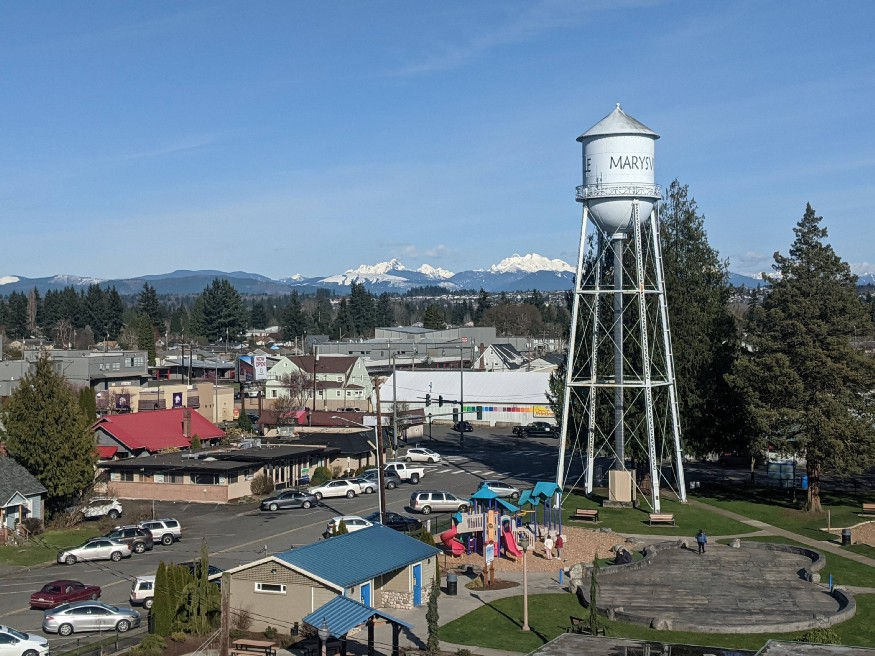
The growth we are seeing in Everett, Arlington, and Marysville isn't a temporary boom. It is the laying of a concrete foundation. And we are just getting started.
The Clean Tech Grid: Powering the New Blueprint
A sustainable community requires resilient infrastructure. While mainstream tech conversations still revolve around software and algorithms down south, Snohomish County has quietly claimed the master keys to the physical future: Clean Energy and Advanced Automation.

We are seeing global-tier energy pioneers like Helion Energy and Zap Energy anchor themselves right here in our backyard. They aren't just occupying commercial space; they are pulling massive venture capital and highly specialized engineering talent directly into the county's ecosystem.
This level of innovation demands a highly advanced utility grid to support it. The Snohomish County Public Utility District (PUD) deserves direct recognition here for doing the heavy lifting behind the scenes. Maintaining a portfolio that delivers an average of 90% clean energy heavily rooted in renewable hydropower is impressive on its own.
But from an infrastructure standpoint, the real mastery is in their grid resilience projects. Look at the Arlington Microgrid—integrating a 500-kW solar array, advanced battery storage, and smart grid-relaying systems built in partnership with Hitachi Energy. For local manufacturers, automated facilities, and precision shops, this means seamless power transfers and bulletproof operational uptime. The foundation is built to withstand the pressure of rapid scale.

Structural Stability: Protecting the Commercial Environment
Economic momentum stalls if the civic foundation underneath it is fractured. One of the primary reasons high-performing businesses are migrating out of hyper-congested urban centers is the compounding friction of unchecked property crime and retail instability. Snohomish County’s response has been distinctly organized, proactive, and collaborative.
Rather than letting civic friction disrupt local business infrastructure, regional leaders have built a highly coordinated safety net. Municipalities across the county have leaned heavily into co-responder models, pairing law enforcement directly with behavioral health professionals to address the root causes of community distress on the spot.
We have to acknowledge the exceptional work being done through the county's specialized diversion and community development programs. By aggressively funding initiatives that address problematic public behaviors, substance abuse, and chronic nuisance issues before they spiral into systemic property crime, the community is actively shifting individuals out of destructive cycles and back toward paths of productivity.
This intentional approach is clearly mapped out in Snohomish County’s 2025–2029 Consolidated Plan, which directs critical federal and local funding straight into public facilities, behavioral health infrastructure, and comprehensive civic services. The result is a safe, predictable, and welcoming environment. When the "better community overall" vibe is maintained, consumer confidence remains high, storefronts stay secure, and local business owners can focus their capital on expansion rather than security.

The Cascade Corridor: Scaling the Network
When the physical space is designed correctly, business infrastructure scales naturally. Look at the Cascade Industrial Center (CIC) stretching across Arlington and Marysville. This isn't just zoned land; it is a meticulously planned manufacturing and logistics corridor designed to inject over 11,000 family-wage jobs into the local economy over the coming decade.
With tech giants like Amazon advancing early-stage logistics facilities within this zone, the historic "bedroom community" dynamic has officially flipped. This infrastructure creates a massive, localized reverse commute. High-wage manufacturing, supply-chain, and technical roles mean that capital generated within Snohomish County stays right here, flowing directly into independent automotive shops, local trades, specialty contractors, and regional B2B services.
This is the exact layout of the ripple effect. The big anchors lay the groundwork, but the secondary and tertiary networks—the high-performing local service providers we highlight across our digital platforms—are the gears that actually keep the machine moving smoothly.
Forward Momentum: The Work Ahead
What we are witnessing across Snohomish County right now is a masterclass in regional design. By combining advanced industrial innovation with proactive civic care, the community has built a resilient blueprint for long-term growth.
Everett’s economy is picking up speed, driven by diversified industrial sectors and genuine civic pride. Local schools are modernizing to feed talent directly into these emerging tech and manufacturing pipelines. The region is proving that you can build a massive economic powerhouse without compromising safety or the distinct, grounded character of the Pacific Northwest.
But a blueprint is only as good as the execution. The foundation has been poured, the grid is live, and the infrastructure is holding strong. Now, it’s about maintaining the forward momentum. At lxmnv.com, we are continuing to build the digital architecture that connects, highlights, and accelerates the high-performing businesses driving this region forward.
The groundwork is set. The real build begins now.

Sources
Snohomish County PUD: Grid Resiliency & Community Energy Infrastructure Reports. Documentation on the 90% clean energy portfolio and the Arlington Microgrid system architecture via Snohomish PUD.
Snohomish County Human Services: Strategic Consolidated Plan Framework. Comprehensive outlines on federal grant distribution for behavioral health facilities and community safety infrastructure via Snohomish County WA.


Comments